Tapa and Maori pattern generator
Bands of bark cloth, and spirals of fern. Choose tapa or kowhaiwhai, how many motifs run across the tile and how many bands or rows there are, and export a seamless Polynesian-style pattern as SVG, PNG or CSS.
Open in the generator How it works
Beaten bark and painted rafters
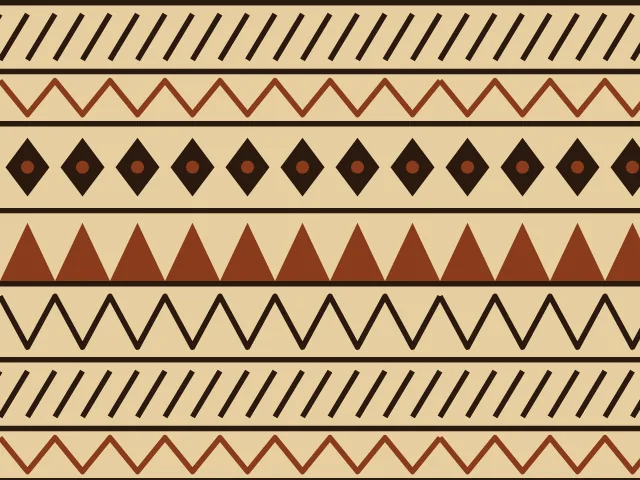
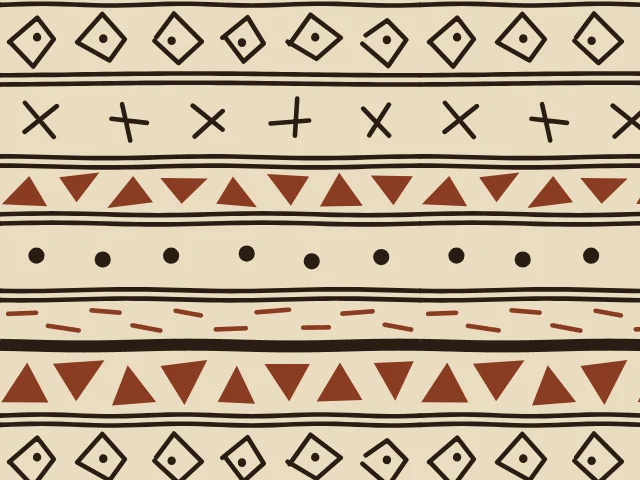
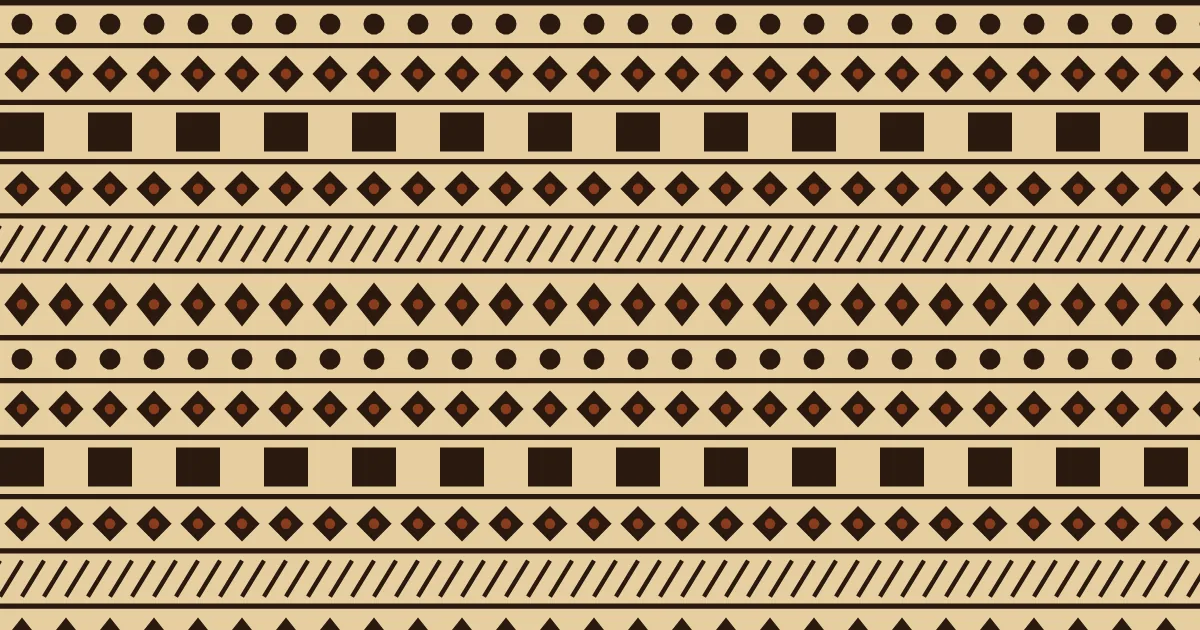
Tapa is cloth beaten from the inner bark of the paper mulberry tree. It is made across Polynesia, in Tonga, Samoa, Fiji and Hawaii, and decorated in horizontal bands of repeated motifs: rows of teeth, zigzags, diamonds, dots and checks, in dark brown and rust on a pale ground. Kowhaiwhai are the painted patterns on the rafters of Maori meeting houses, built on the koru, the curl of a young fern frond that is about to unfurl.
Ornamatic draws general versions in the manner of these traditions, and does not copy a particular cloth or house.
How the generator builds them
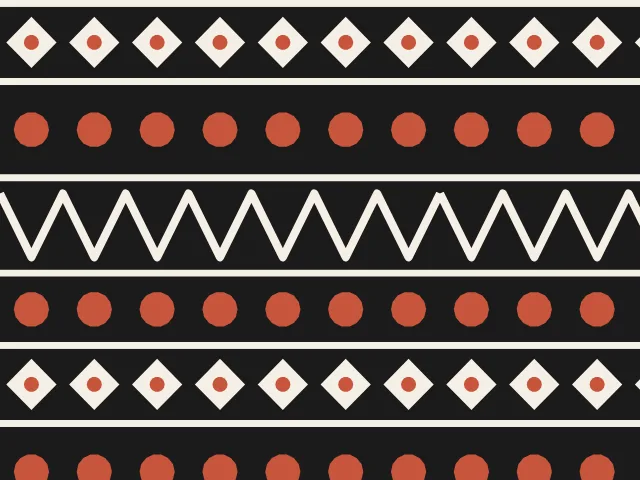
In the tapa style the tile is a stack of narrow bands, each filled with a single repeating motif: triangles, zigzags, diamonds with a dot, dots, squares or slanted dashes, and divided from the next by a line. The same motif is never used twice in a row, not even across the edge of the tile.
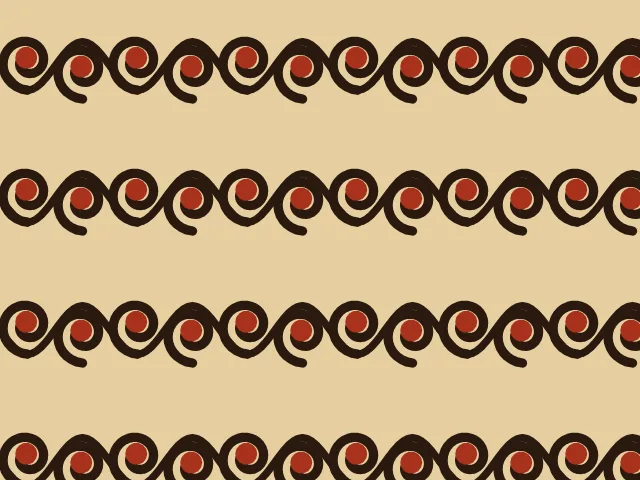
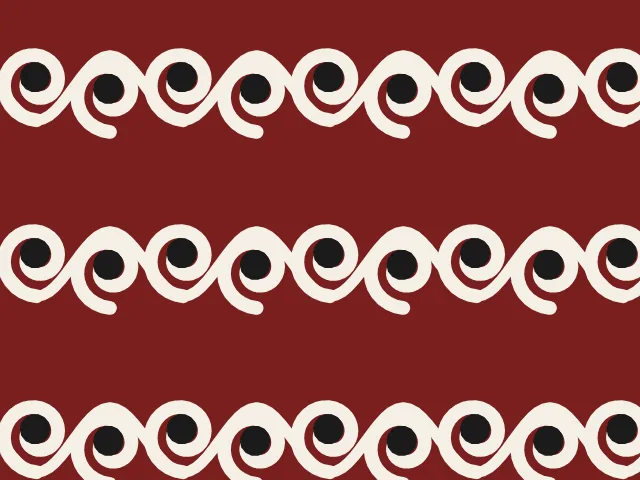
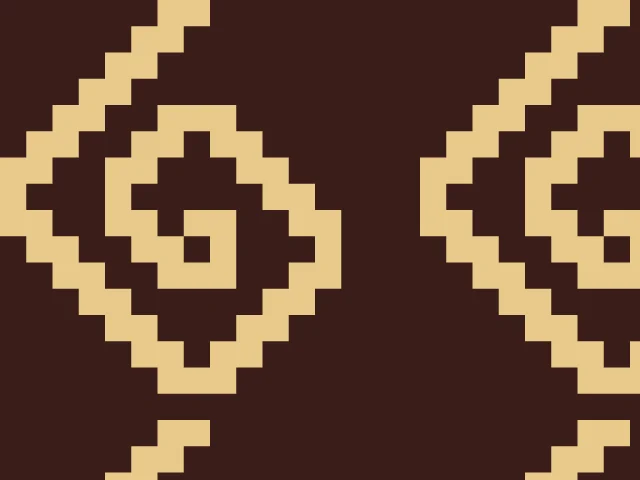
In the kowhaiwhai style a wavy stem runs along each row with a pair of koru spirals curling away from it. In both styles the number of motifs is a whole number across the tile, so the pattern repeats exactly.
What you can adjust
- Style — tapa or kowhaiwhai.
- Motifs across — how many repeats fit across the tile.
- Bands or rows — how many bands of tapa, or rows of koru.
- Line weight — a fine line or a bold one.
- Other bands — a new choice and order of bands.
- Colors — a ground and up to two inks; any palette.
Export and use
Download the seamless tile as PNG or SVG, or copy a ready CSS background. The patterns you create are free to use, personally or commercially.