Cellular automata pattern generator
Complex pixel art from one tiny rule. Choose a Life-like rule or one of Wolfram’s elementary rules, set the size and the number of generations, color the cells by age, and export a seamless pattern as SVG, PNG or CSS.
Open in the generator How it works
Patterns that grow
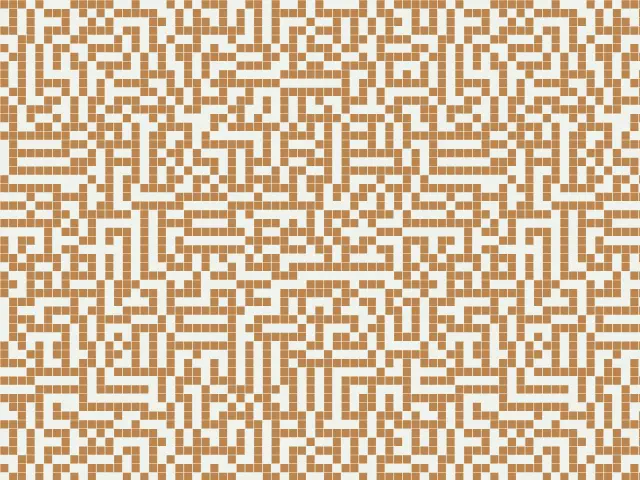
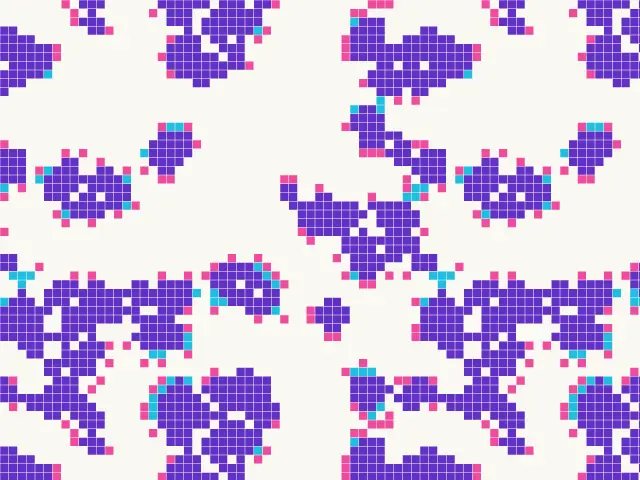
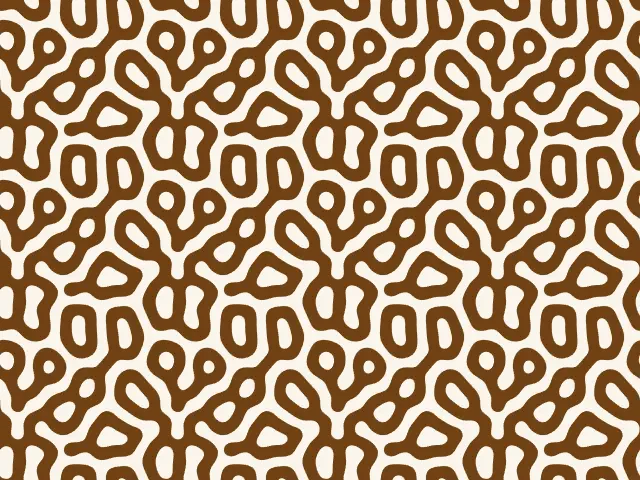
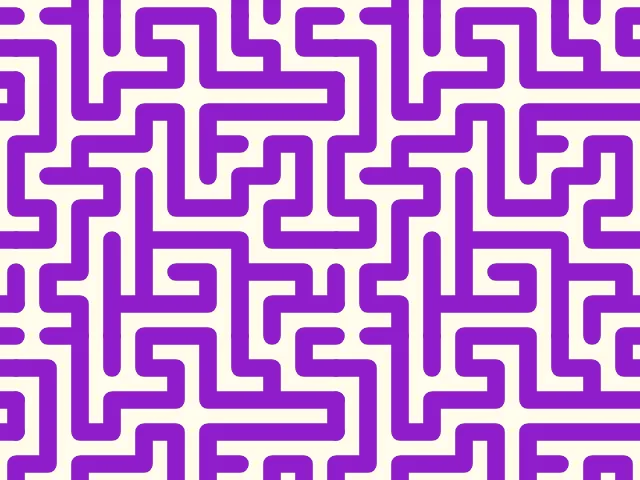
A cellular automaton is a grid of cells, each alive or dead. At every step, every cell looks at its neighbors and changes by a fixed rule. Conway’s Game of Life (1970) is the best known: a dead cell with exactly three live neighbors is born, and a live cell with two or three survives. Similar rules, with other numbers, give very different pictures: mazes, coral, growing blobs.
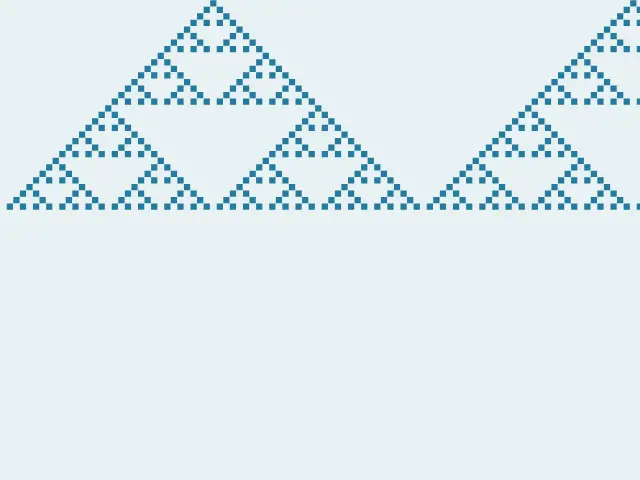
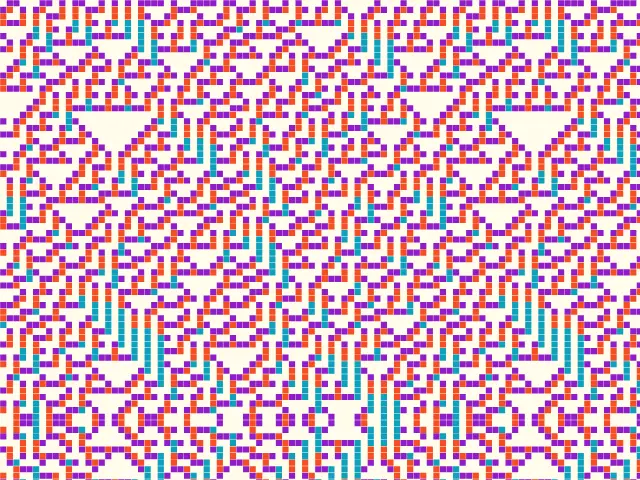
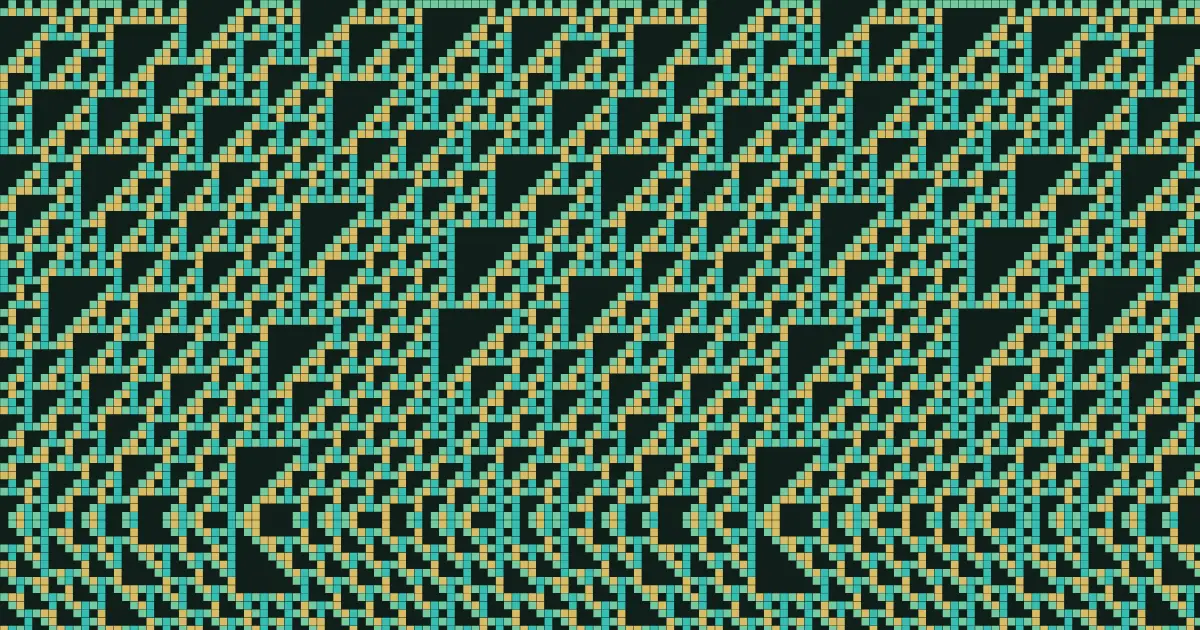
Stephen Wolfram studied the simplest case, one row of cells, where each cell depends on itself and its two neighbors. There are only 256 such rules, and some are famous: rule 90 draws the Sierpinski triangle, rule 30 looks random, and rule 110 is complex enough to do any computation. Some seashells grow patterns like these.
How the generator builds them
For the Life-like rules, Ornamatic fills a square grid with a random start, runs the rule for the number of generations you choose, and draws the result. The grid wraps around like a torus, with the right edge next to the left edge and the top next to the bottom, so the snapshot is a seamless tile. If a rule dies out, the last living generation is kept.
The elementary rules are drawn one row per step, from the top down. The picture is then mirrored top to bottom so that it joins up when repeated. Cells are colored by age, so that new cells and old ones differ: how many steps in a row a cell has been alive.
What you can adjust
- Kind — Life-like rules, or Wolfram’s elementary rules.
- Rule — Conway’s Life, HighLife, Day and Night, Maze, Coral, Seeds or Replicator; or rules 30, 90, 110, 54 and others.
- Cells — from 12 to 96 across one tile.
- Generations and start density — how long the pattern grows and how full the start is.
- Start — for elementary rules, one cell or a random row.
- Gap — the space between cells.
- Colors — by age or one color; any palette; a shuffle for a new start.
Export and use
Download the seamless tile as PNG or SVG, or copy a ready CSS background. The patterns you create are free to use, personally or commercially.