Turing pattern generator
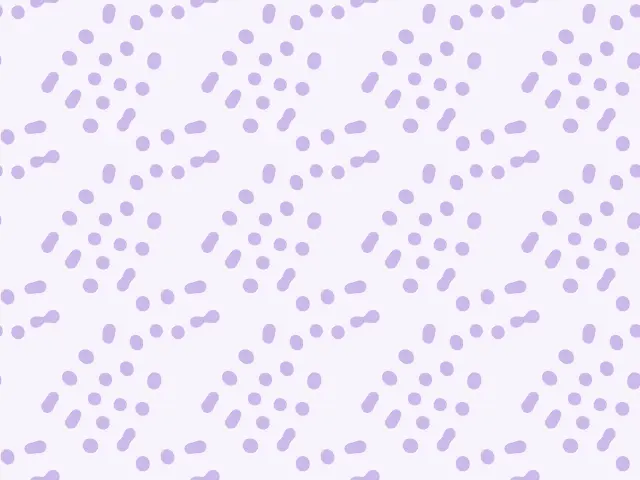
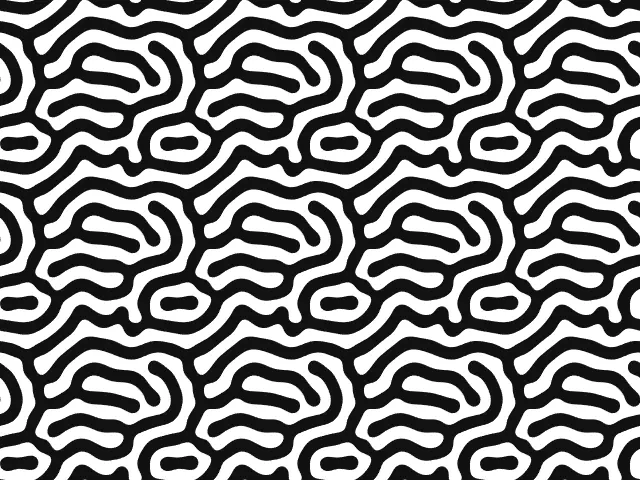
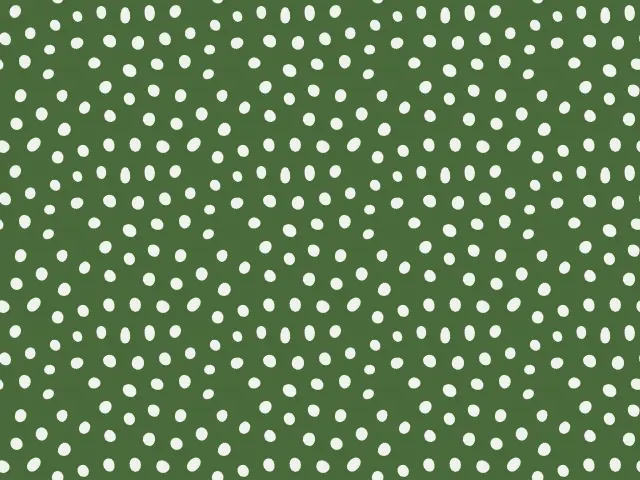
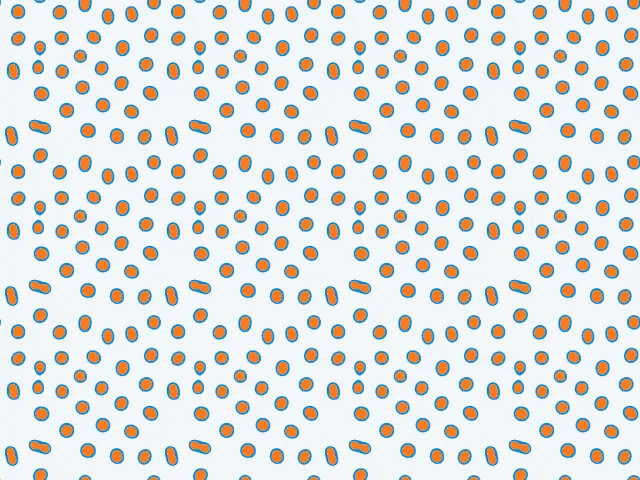
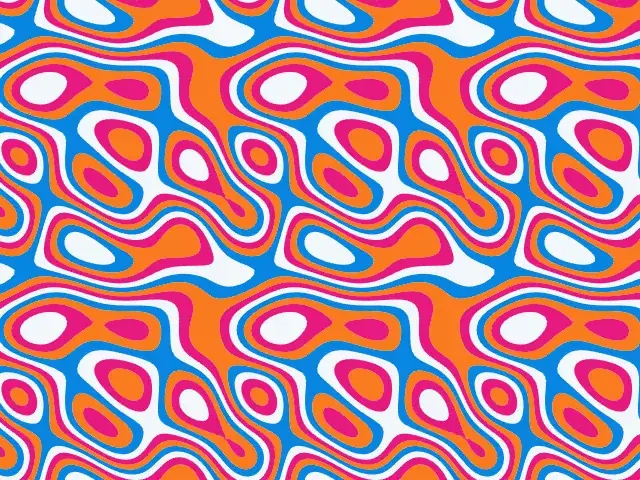
Patterns that grow like the markings on a leopard or a coral. Choose spots, a maze, coral, worms or mitosis, let the simulation run in your browser, and export the seamless result as SVG, PNG or CSS.
Open in the generator How it works
What is a Turing pattern?
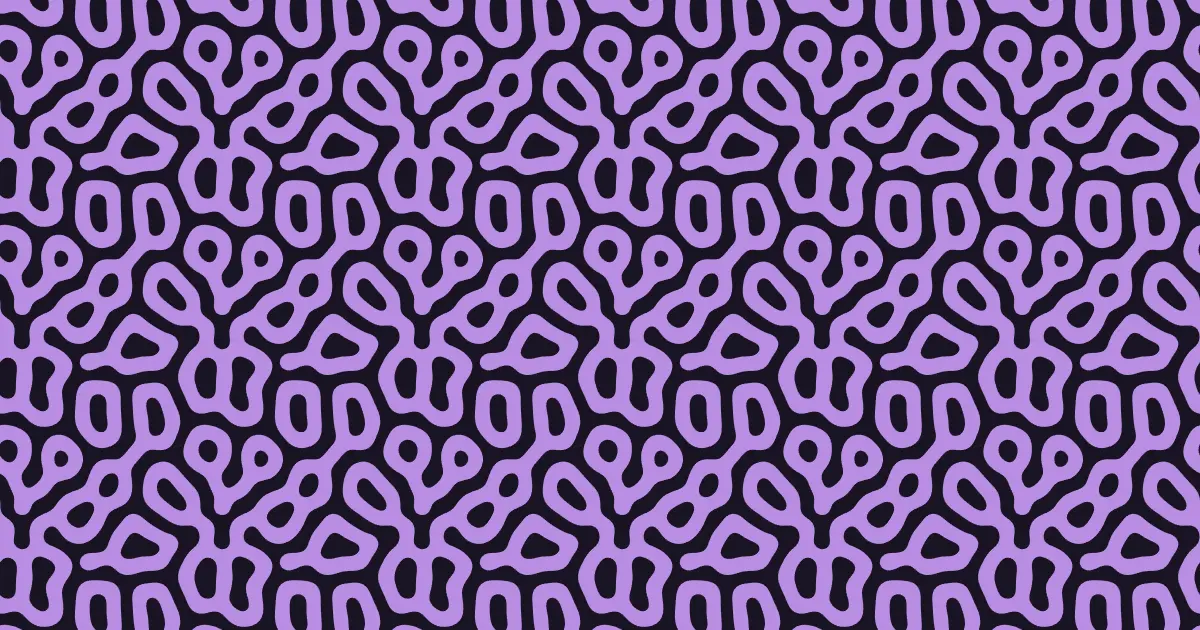
In 1952 the mathematician Alan Turing proposed that the spots and stripes on animals could appear by themselves, when two chemicals spread through tissue and react with each other at different speeds. Patterns of this kind are now called Turing patterns, and similar models are used to study markings on fish, shells and fur.
The effect is that even a nearly uniform start grows into a regular pattern with a typical spacing between its features.
How the generator builds them
Ornamatic runs the Gray–Scott reaction–diffusion model: two virtual substances diffuse across a grid, and one feeds on the other. Starting from a few random disturbances, the system settles into spots, stripes or other shapes, depending on two numbers, the feed and kill rates. Each mode in the list is a ready-made pair.
The grid wraps around at the edges, so the result is a seamless tile. The simulation takes a few seconds and runs in the background, so the page stays responsive. A threshold then turns the smooth concentrations into sharp shapes.
What you can adjust
- Mode — spots, maze, coral, worms, holes or mitosis.
- Threshold — where the edge of a shape falls: thin or thick.
- Level count — one level, or two nested ones.
- Detail and development time — a finer grid and a longer run give finer patterns.
- Shuffle — a new random start.
- Colours — any palette.
Export and use
Download the seamless tile as PNG or SVG, or copy a ready CSS background. The patterns you create are free to use, personally or commercially.