
Chinese and Korean pattern generator
Auspicious clouds, cobalt blue and stitched cloth. Choose ruyi clouds, blue-and-white porcelain, shou roundels or bojagi patchwork, how many motifs fit across the tile and how rich each is, and export a seamless pattern as SVG, PNG or CSS.
Open in the generator How it works
Wishes in cloud and cobalt
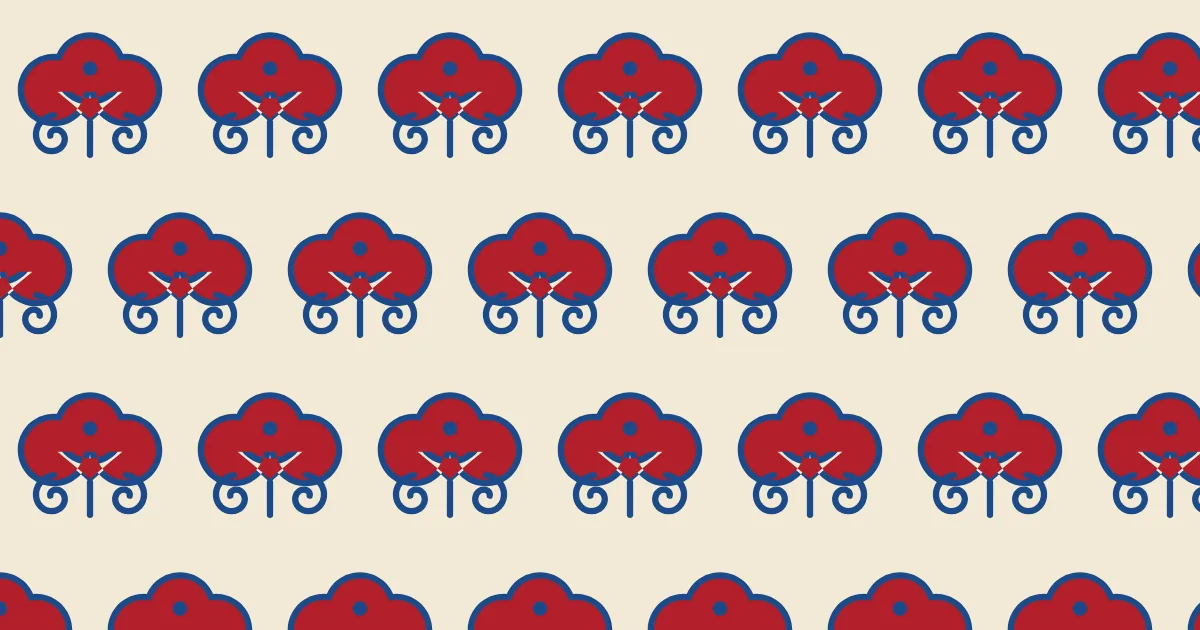
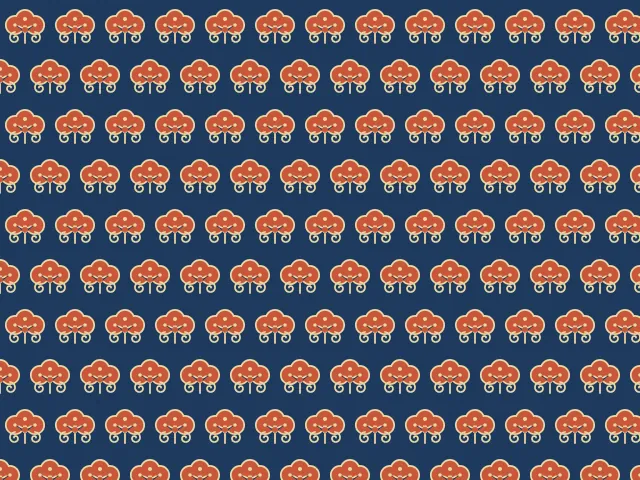
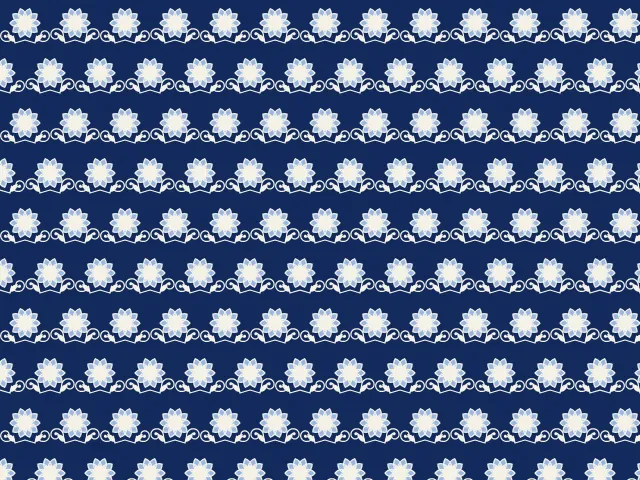
The ruyi, whose name means roughly “as you wish”, is a ceremonial scepter with a curled head, and its shape became a cloud motif that stands for good fortune. Blue-and-white porcelain is painted in cobalt under a clear glaze, and the potters of Jingdezhen covered bowls and vases with scrolling lotus stems in this one color. The shou roundel is the character for long life, written in a circle on silks, lacquer and cakes. Bojagi is Korean cloth wrapping: scraps of silk and ramie are sewn together with flat seams into a patchwork whose colored panes are lit from behind like a window.
Ornamatic draws general versions of these motifs. They are not copies of any particular object.
How the generator builds them
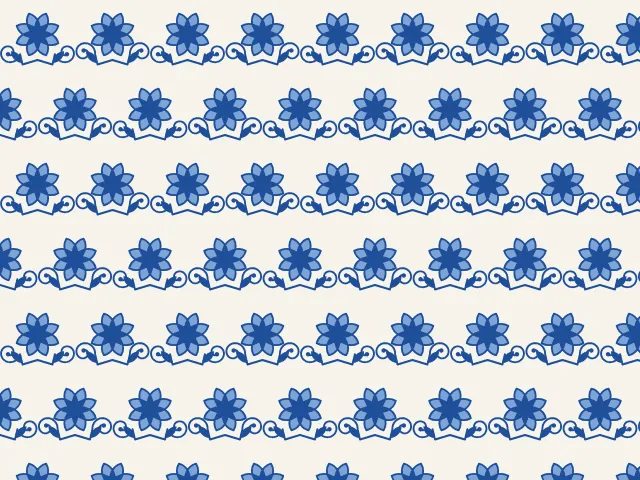
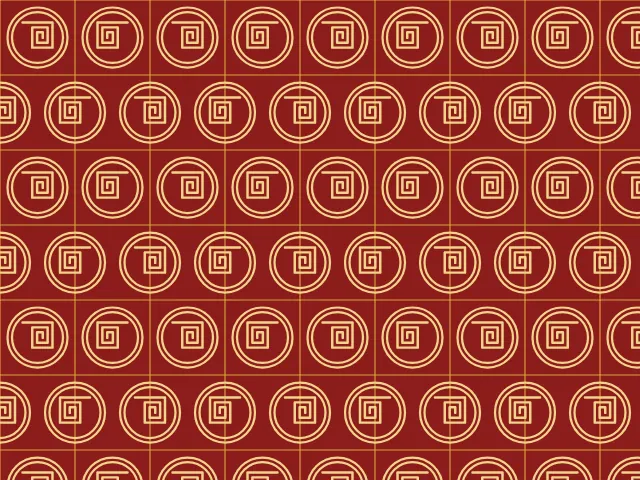
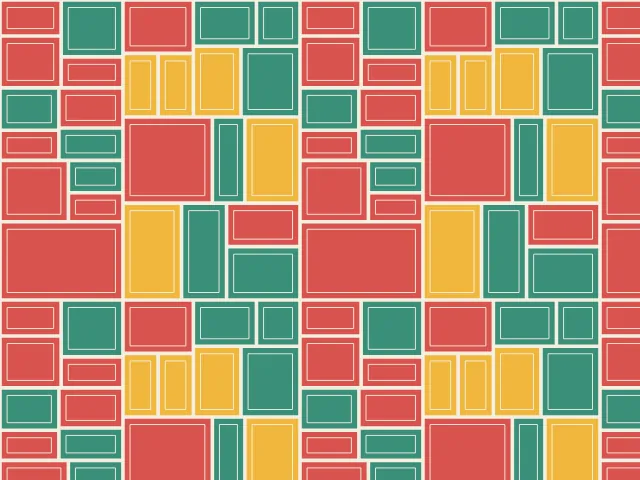
The ruyi is a cloud head of three lobes with a stem that ends in two curls. The porcelain pattern is a lotus flower of petals in two tones on a scrolling stem, with leaves. The shou roundel is a ring with a square spiral inside, the shape of the character, in a faint grid. Bojagi is a patchwork of rectangles of different sizes, each with a stitched border, split into rows and columns.
The motifs sit on a grid with a whole number of cells per repeat, and every other row is shifted by half a cell, so the tile repeats exactly. Richness adds curls, petals, rings or seams, and the variation setting changes how the patchwork is split.
What you can adjust
- Motif — ruyi clouds, blue-and-white porcelain, shou roundels or bojagi.
- Cells across — how many motifs fit into one repeat.
- Richness — more curls, petals, rings or seams.
- Line weight — from a fine thread to a bold outline.
- Variation — how the bojagi panes are split.
- Colors — a ground and up to three more; any palette.
Export and use
Download the seamless tile as PNG or SVG, or copy a ready CSS background. The patterns you create are free to use, personally or commercially.
Open one of these in the generator
See also
-
 Chinese latticesWindow lattices: the irregular ice-ray cracks and the diamond lattice with double bars.
-
 KumikoThin wooden strips with shaped panels fitted into the openings, as in kumiko and mashrabiya screens.
-
 Japanese wagaraTraditional Japanese patterns: waves, hemp leaves, seven treasures, scales.