Gothic tracery and muqarnas pattern generator
Stone made light. Choose foils, an ogee lattice or rows of niches, how many lobes and nested arches there are, and how heavy the lines, and export a seamless pattern as SVG, PNG or CSS.
Open in the generator How it works
Tracery in the windows, niches in the vaults
Tracery is the stonework that divides the upper part of a Gothic window: thin bars that bend into circles, lobes and pointed arches. The lobed shapes are called foils, and the number of lobes gives the name: trefoil, quatrefoil, cinquefoil. The ogee, an arch with an S-shaped curve on each side, came into fashion in the fourteenth century and returned in the architecture of India and Persia. Muqarnas is the Islamic counterpart: tiers of small niches that stack into a honeycomb vault, a way to turn a square room into a dome.
All three are ways of making a heavy material look lacy and weightless.
How the generator builds them
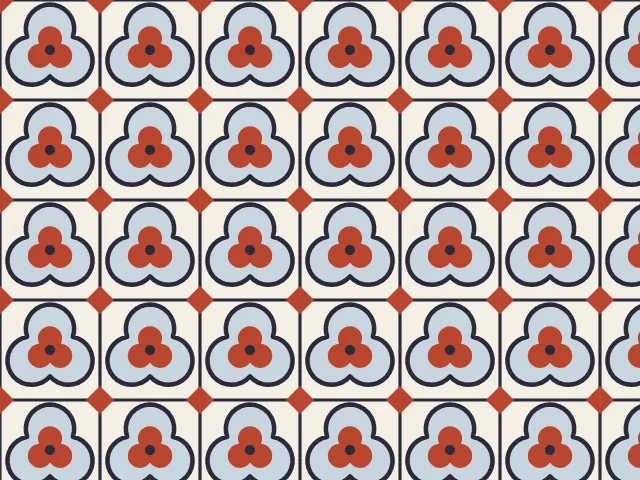
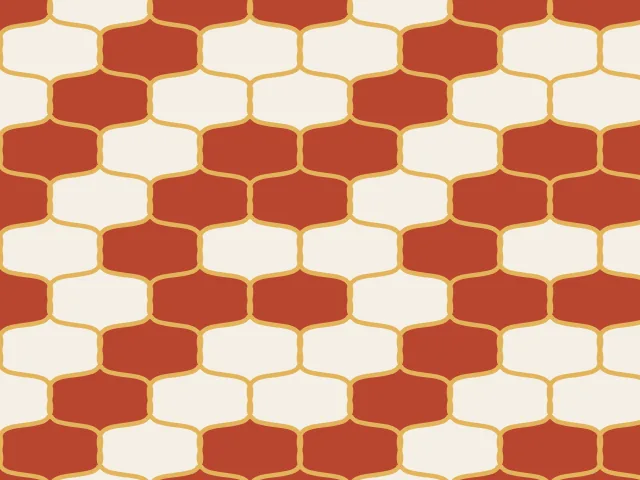
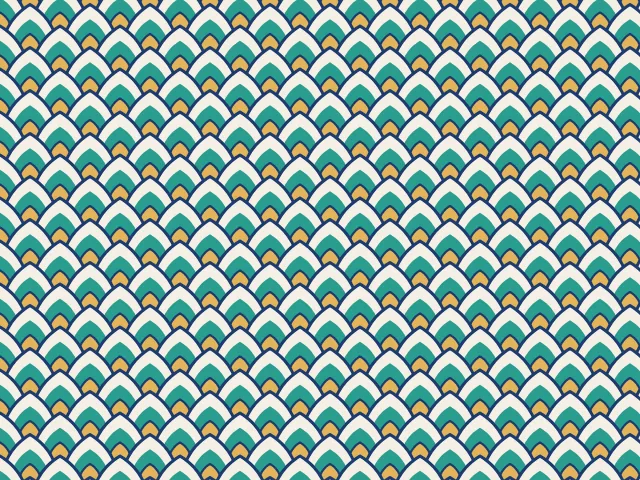
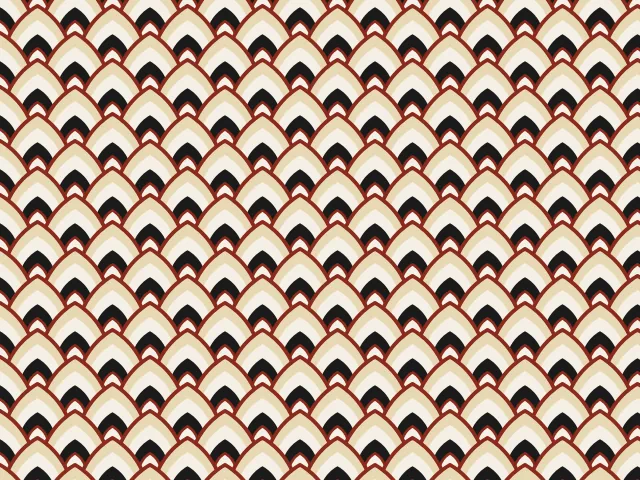
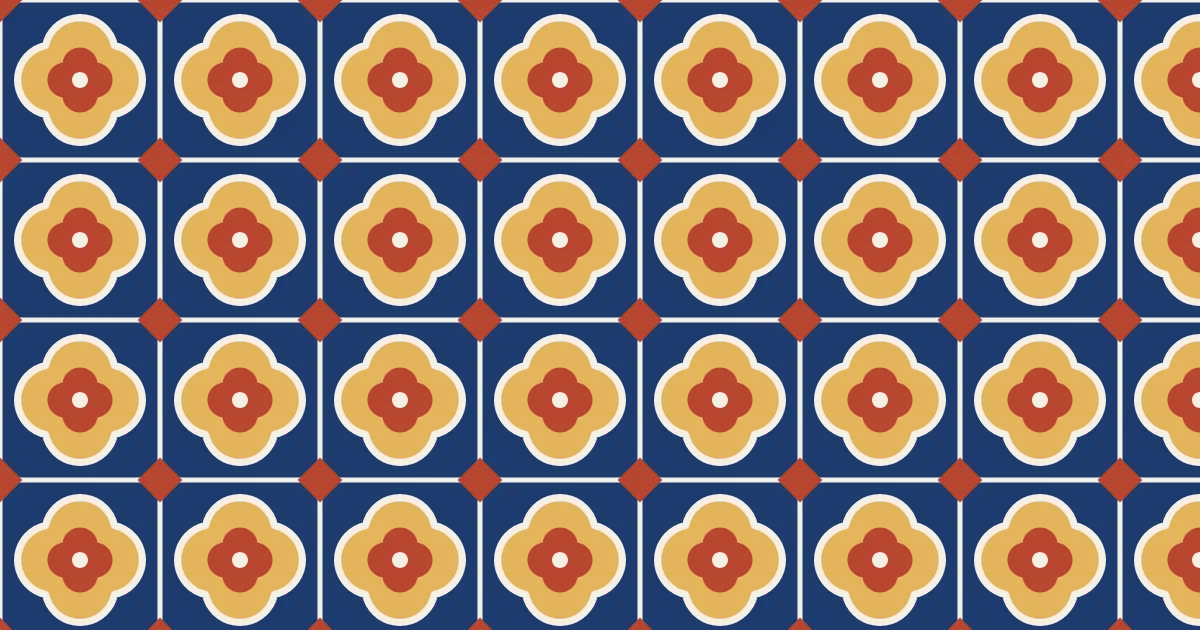
The foils are drawn as arcs that meet at sharp cusps, with cells separated by thin bars and a diamond where four cells meet. The ogee lattice is made of S-curves that close into cells, optionally colored in a checker. The niches are rows of pointed arches, each with smaller arches inside, laid like scales so that the lower row overlaps the one above.
Every cell has a whole number of repeats in the tile, and the arcs are cut at the same places on opposite edges, so the pattern joins up without a seam.
What you can adjust
- Style — foils, ogee lattice or niches.
- Cells across — how many cells or arches fit into one repeat.
- Lobes — three for a trefoil, four for a quatrefoil, up to six.
- Nested arches — how many arches sit inside each niche.
- Line weight — from a hairline to heavy stone bars.
- Colors — a ground and up to three more; any palette.
Export and use
Download the seamless tile as PNG or SVG, or copy a ready CSS background. The patterns you create are free to use, personally or commercially.