Op art pattern generator
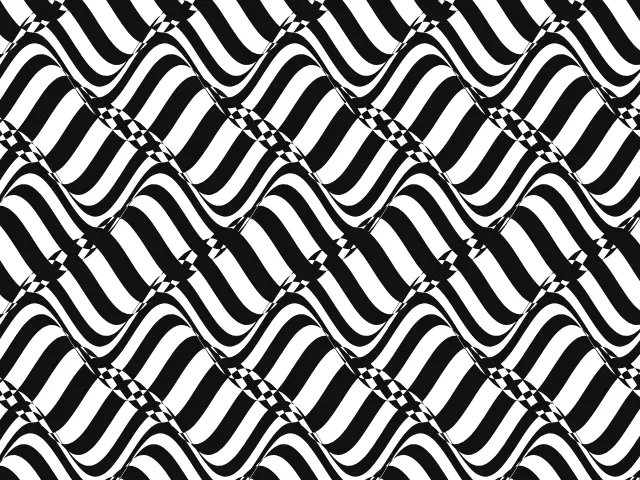
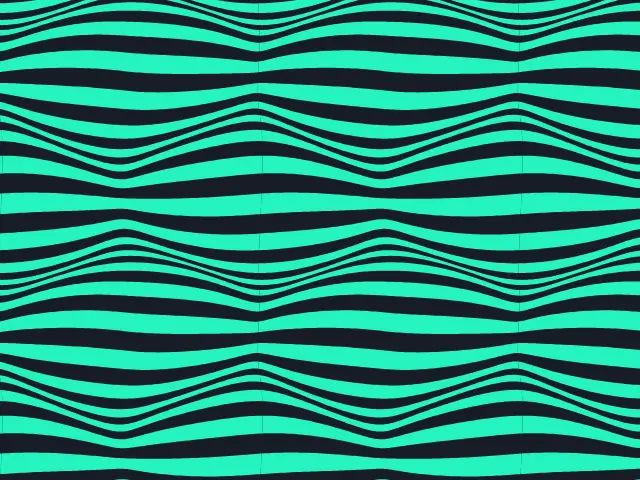
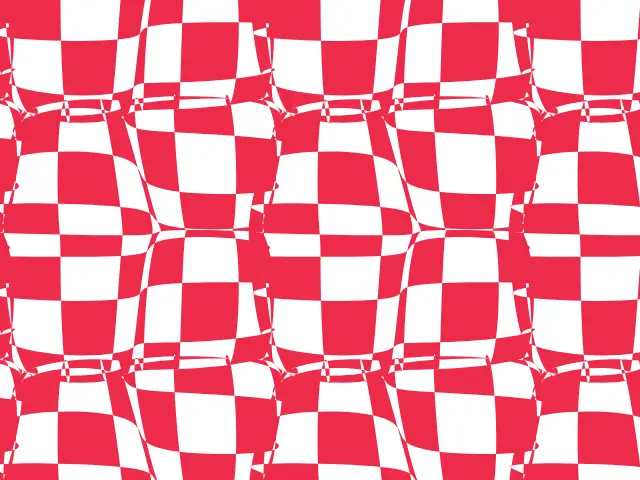
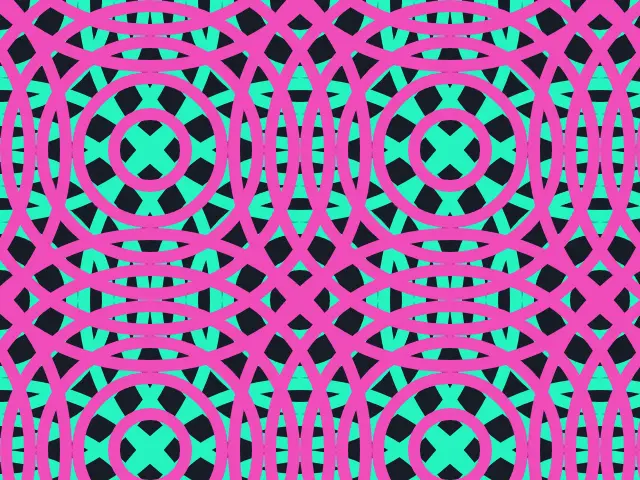
Patterns that seem to move. Choose waves, bulges, a warped checkerboard or concentric ripples, set the number of lines and how strongly they are distorted, and export a seamless pattern as SVG, PNG or CSS.
Open in the generator How it works
What is op art?
Op art, short for optical art, is an art movement of the 1960s that used simple geometric shapes, strong contrast and repetition to create illusions of movement, depth and vibration. Its best-known artists include Victor Vasarely and Bridget Riley.
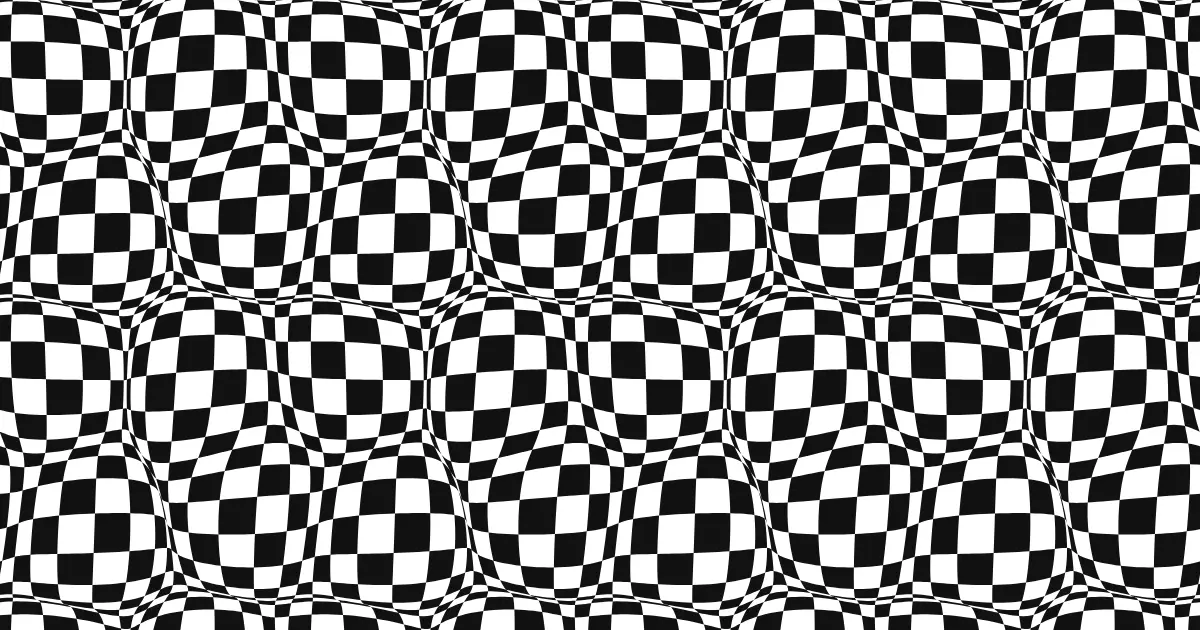
The effect comes from regular lines or squares that are distorted by a smooth function. The eye expects a regular grid, sees it bend, and reads the result as a surface that swells or ripples.
How the generator builds them
Ornamatic starts with a regular set of parallel stripes, circles or a checkerboard and displaces every point by a smooth wave or bump function. The displacement is periodic, so the distorted lines still join across the edges of the tile and the pattern is seamless.
Stripes and checkerboards are drawn as filled bands in two colours; the lines option draws only the edges. Ripples are concentric rings which, repeated across tiles, produce moiré: interference patterns between overlapping rings.
What you can adjust
- Effect — waves, bulges, warped checkerboard or ripples.
- Line count — the number of stripes, cells per row or rings.
- Distortion strength — from a gentle sway to a strong swirl.
- Waves or bulges — how many fit across the tile.
- Kind — filled stripes or thin lines.
- Other bulges — a new random arrangement.
- Colours — any palette; black and white gives the classic look.
Export and use
Download the seamless tile as PNG or SVG, or copy a ready CSS background. The patterns you create are free to use, personally or commercially.