Spirograph and guilloche pattern generator
Draw with gears. Choose a hypotrochoid, an epitrochoid, a rose curve or a Lissajous figure, set the gear teeth and the pen hole, repeat it into a guilloche rosette, and let the rosettes overlap on a seamless grid. Export as SVG, PNG or CSS.
Open in the generator How it works
Curves drawn by gears
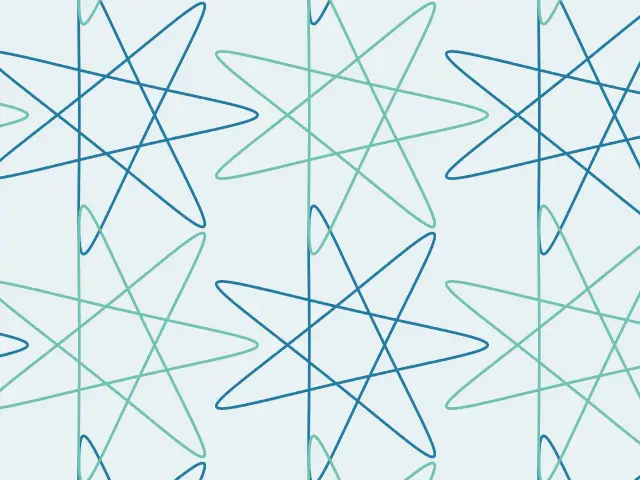
The Spirograph, a drawing toy by the British engineer Denys Fisher from 1965, draws loops by moving a pen in a hole of a small gear that rolls round inside a larger ring. The curve it draws is a hypotrochoid. If the gear rolls around the outside of the circle instead, the curve is an epitrochoid.
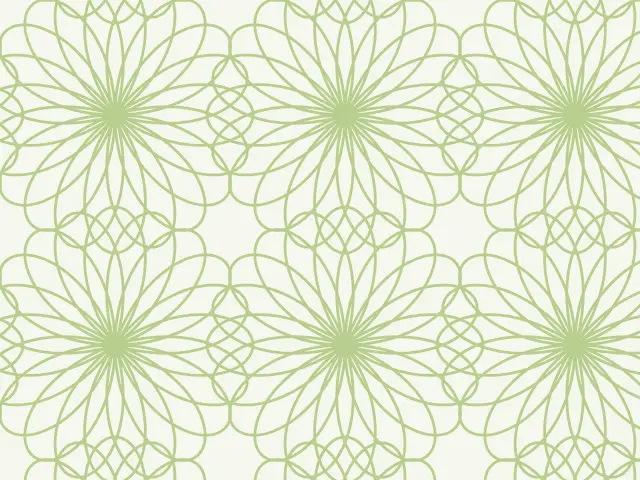
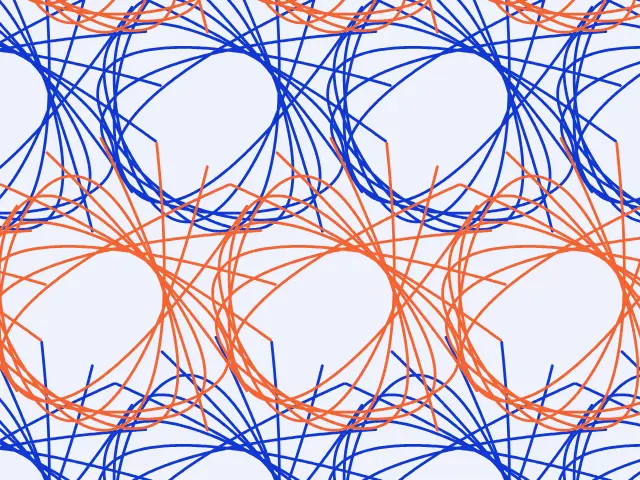
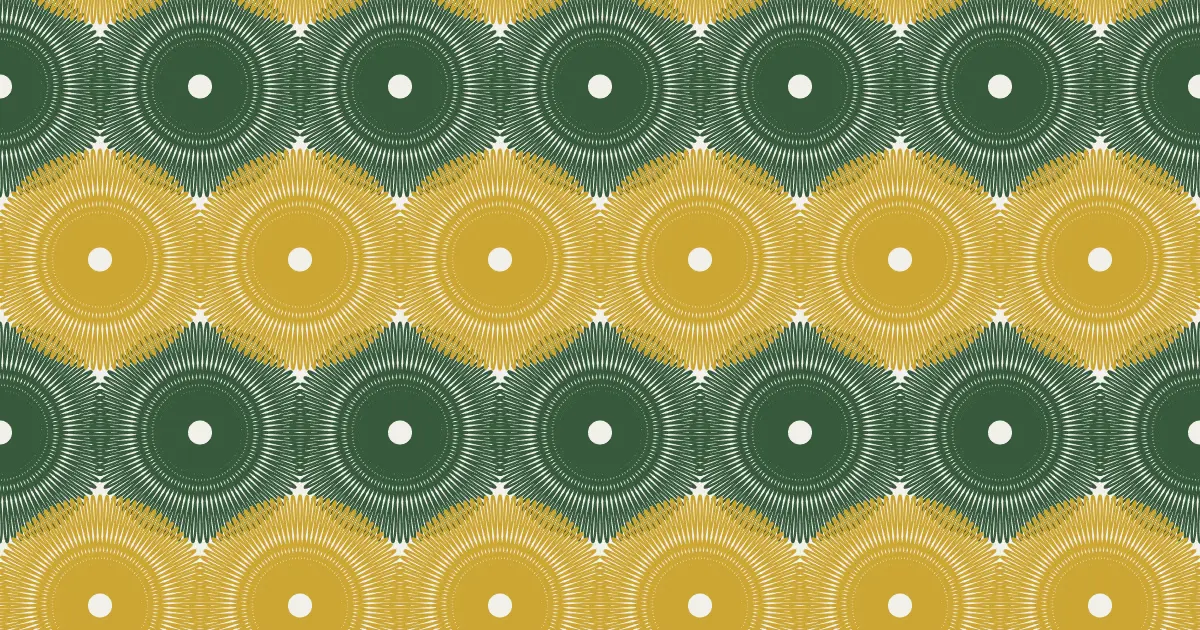
Two other classic families look similar: rose curves, shaped like flower petals, and Lissajous figures, which come from two vibrations at right angles to each other and were studied by Jules Antoine Lissajous in the 1850s. Repeating one curve at many rotations gives a guilloche, the fine engraved pattern used on banknotes, certificates and watch dials.
How the generator builds them
The number of lobes and turns correspond to the teeth of the outer and the inner wheel. Together with the pen offset they decide the shape: how many loops there are and how far the pen reaches. Every curve is closed, so it ends exactly where it began, and is scaled to a unit radius.
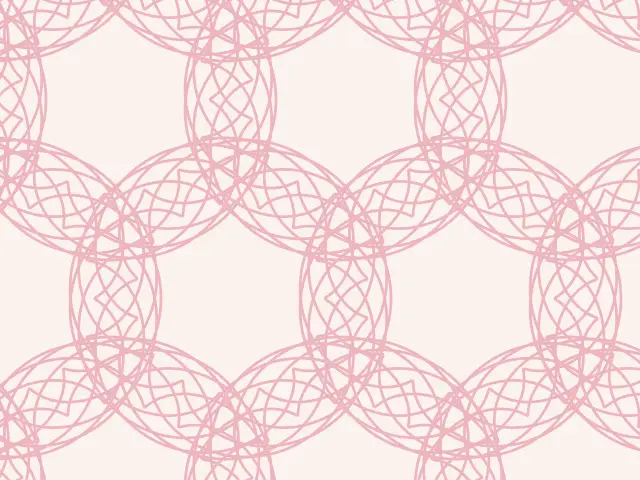
The rosettes are then placed on a square or a hexagonal grid. When the size is greater than half the spacing, neighboring rosettes overlap and weave into a web, and the pattern repeats exactly across the edges of the tile.
What you can adjust
- Curve — hypotrochoid, epitrochoid, rose curve or Lissajous figure.
- Lobes and turns — the teeth of the two wheels, which shape the curve.
- Pen offset — how far the pen is from the center of the inner wheel; the phase for Lissajous figures.
- Copies — rotated copies of the curve, for a guilloche rosette.
- Rosette size and grid — square or hexagonal; larger rosettes overlap.
- Draw — lines or filled shapes, with an adjustable line width.
- Colors — one color or alternating; any palette.
Export and use
Download the seamless tile as PNG or SVG, or copy a ready CSS background. The patterns you create are free to use, personally or commercially.